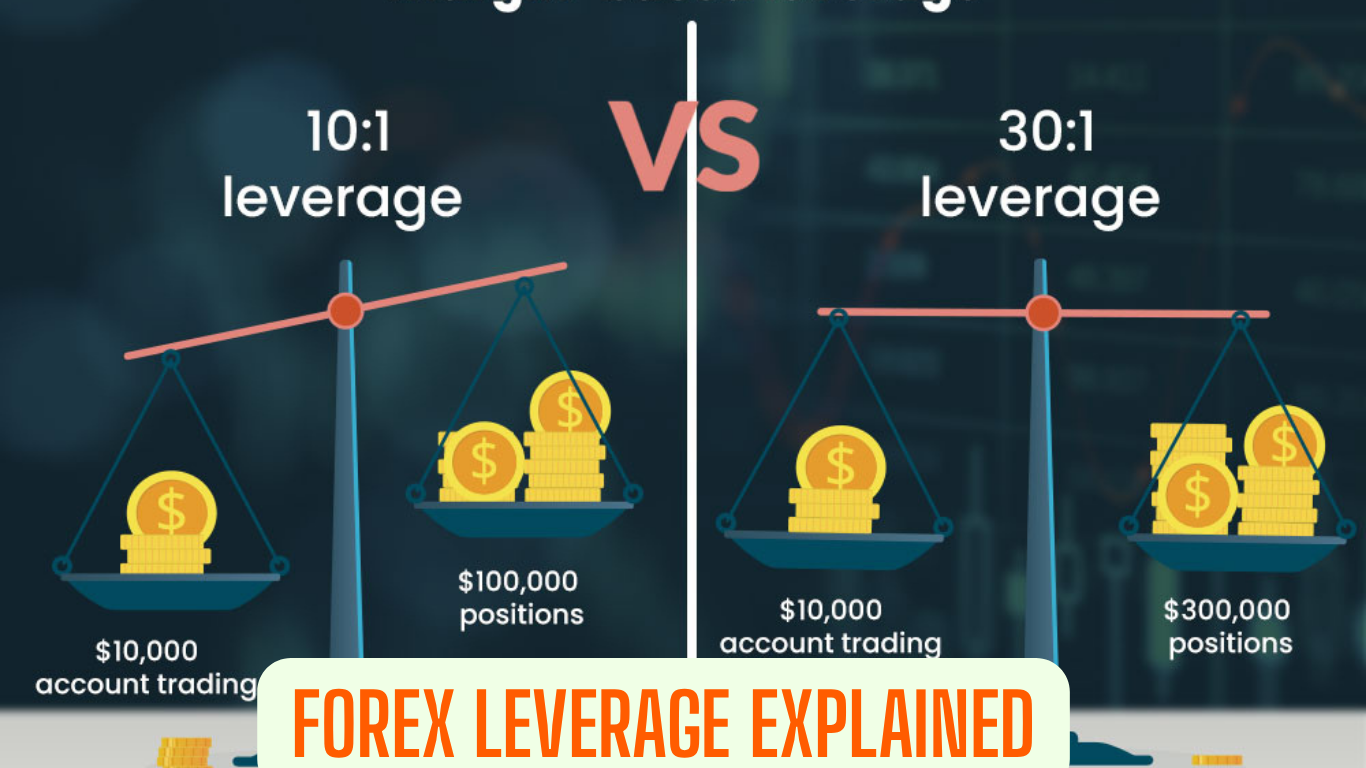
Forex leverage is a fundamental concept that every trader must master, representing a powerful tool that allows you to control a large position in the market with a relatively small amount of your own capital. Essentially, it’s a loan provided by your broker that amplifies your buying power, enabling you to potentially magnify your returns from small price movements in the currency market. While this can significantly increase profit potential, it simultaneously amplifies the risk of losses, making it a classic double-edged sword in the world of trading.
This comprehensive guide will demystify forex leverage, exploring its core mechanics, the relationship with margin, its undeniable benefits, and its significant risks. You will learn practical strategies for using leverage responsibly to align with your trading goals and risk tolerance.
What is Forex Leverage and How Does It Work?
At its core, leverage involves using a deposit, known as margin, to gain increased exposure to an underlying asset. When you open a leveraged trade, you are only required to commit a fraction of the full trade’s value, while your broker lends you the rest. This ratio of your total exposure to your margin is known as the leverage ratio.
For example, with a leverage ratio of 50:1, you can control $50,000 in the market for every $1,000 of your own capital. This means that a 1% favorable move in the market could potentially yield a 50% return on your invested capital. Conversely, a 1% move against your position could result in a 50% loss.
The Crucial Link: Leverage and Margin
Leverage and margin are two sides of the same coin. Margin is the amount of your own money that you must deposit to open and maintain a leveraged position. It acts as a good-faith deposit or collateral for the loan provided by your broker.
- Margin Requirement of 1% = Leverage of 100:1
- Margin Requirement of 2% = Leverage of 50:1
- Margin Requirement of 10% = Leverage of 10:1
It’s critical to understand that your profit or loss is calculated based on the full value of the position, not just your margin amount. This is why both gains and losses can be magnified.
A Practical Example of Leverage in Action
Let’s compare an unleveraged trade with a leveraged one to illustrate the dramatic difference.
Scenario: You want to trade $100,000 of USD/CHF.
- Without Leverage: You would need the full $100,000 to open the trade. If the price moves 1% in your favor, you make a $1,000 profit (a 1% return on your capital).
- With 5% Margin (20:1 Leverage): You only need $5,000 to open the same $100,000 position. The same 1% favorable price movement still gives you a $1,000 profit, but this represents a 20% return on your $5,000 capital.
However, if the price moves against you by 1%, you would lose $1,000—a 20% loss of your initial margin in the leveraged example, compared to just a 1% loss without leverage.
Common Leverage Ratios and Their Meanings
Leverage ratios can vary widely depending on the broker and regulatory environment. Here is a breakdown of common tiers:
The Benefits of Using Leverage
- Amplified Returns: The primary advantage is the ability to turn small price movements into significant percentage returns on your initial capital.
- Capital Efficiency: Leverage frees up your capital, allowing you to diversify your trades across multiple currency pairs or strategies without committing a large amount of cash to a single position.
- Accessibility for Retail Traders: The forex market involves large position sizes (e.g., a standard lot is 100,000 units). Leverage makes it possible for traders with limited capital to participate meaningfully in this market.
- Enhanced Trading Flexibility: With greater buying power, you can implement a wider range of strategies, including short-term scalping or swing trading, that rely on smaller price movements.
The Significant Risks and Drawbacks
- Magnified Losses: This is the most critical risk. Just as leverage can boost profits, it can also accelerate losses. A small adverse market move can wipe out a significant portion or all of your margin.
- Margin Calls and Liquidation: If your open losses cause your account equity to fall below your broker’s required maintenance margin level, you will receive a margin call. This requires you to either deposit additional funds immediately or see your positions automatically closed (liquidated) by the broker to prevent further losses.
- Psychological Pressure: Managing large, leveraged positions can be emotionally taxing. The stress of potential rapid losses can lead to impulsive decisions and deviation from a solid trading plan.
- Risk of Account Depletion: Overleveraging—using too high leverage relative to your account size—is a common reason many novice traders quickly lose their entire trading capital.
Essential Risk Management Strategies for Leveraged Trading
To trade with leverage successfully, you must adopt disciplined risk management.
- Use Stop-Loss Orders: Always attach a stop-loss order to every trade. This pre-set order automatically closes your position at a specific price level, capping your potential loss on that trade.
- Start with Lower Leverage: Beginners should always start with lower leverage ratios (e.g., 10:1 or 20:1) to get accustomed to the market dynamics without taking on excessive risk.
- Practice Proper Position Sizing: Never risk a large percentage of your account on a single trade. A common rule of thumb is to risk only 1-2% of your account capital per trade.
- Monitor Your Margin Level: Keep a close eye on your account’s margin level to avoid margin calls. Ensure you have sufficient unused capital in your account to withstand normal market fluctuations.
- Educate Yourself Continuously: The forex market is complex. Continuous learning about market conditions, economic factors, and trading psychology is non-negotiable for long-term success.
Conclusion
Forex leverage is an incredibly powerful tool that can open the door to significant opportunities, but it demands respect and disciplined management. Understanding that it amplifies both profits and losses is the first step toward using it effectively. By starting modestly, employing strict risk management rules like stop-loss orders, and never risking more than you can afford to lose, you can harness the power of leverage to pursue your trading objectives while protecting your capital from catastrophic losses. Remember, in leveraged trading, the goal is not just to make profits, but to preserve your ability to trade another day.
Disclaimer
This article is for informational and educational purposes only and does not constitute financial advice, investment recommendation, or an offer or solicitation to buy or sell any financial instruments. Trading foreign exchange (Forex) on margin carries a high level of risk and may not be suitable for all investors. There is a possibility that you may sustain a loss equal to or greater than your entire investment. Therefore, you should not invest or risk money that you cannot afford to lose. The high degree of leverage can work against you as well as for you. Past performance is not indicative of future results. You should be aware of all the risks associated with Forex trading and seek advice from an independent financial advisor if you have any doubts.
FAQs
1. What is the main difference between leverage and margin?
Leverage is the ability to control a large position with a small amount of capital (e.g., 50:1), while Margin is the actual amount of your own money required to open that leveraged position. Think of leverage as the loan and margin as the collateral or deposit you put down to secure that loan. They are intrinsically linked; a 50:1 leverage ratio means you have a 2% margin requirement.
2. Is high leverage good for beginner traders?
No, high leverage is generally not recommended for beginner traders. While it offers the potential for higher returns, it significantly increases the risk of rapid and substantial losses. Beginners should start with lower leverage ratios (like 10:1 or 20:1) to understand market dynamics and practice risk management without exposing their capital to extreme volatility.
3. What is a margin call and how can I avoid it?
A margin call occurs when your account equity falls below your broker’s required maintenance level due to trading losses. It is a demand from your broker to deposit more funds immediately or risk having your positions forcibly closed. You can avoid margin calls by using conservative leverage, employing stop-loss orders on every trade, risking only a small percentage (1-2%) of your account per trade, and constantly monitoring your margin level.
4. What is a safe leverage ratio to use?
A “safe” leverage ratio is subjective and depends on your experience, risk tolerance, and trading strategy. However, conservative traders often use ratios between 10:1 and 30:1. This provides meaningful market exposure while helping to prevent catastrophic losses from normal market fluctuations. It’s more important to focus on proper position sizing relative to your account balance than on the maximum leverage offered.
5. Can I lose more money than I deposit with leverage?
With standard retail forex trading, most reputable brokers have negative balance protection, which means you cannot lose more than your initial deposit. If your losses approach your account balance, the broker’s automatic liquidation system will close your positions before your account balance goes negative. However, without this protection or in certain market conditions (like extreme gaps), it is theoretically possible, which is why risk management is paramount.