
Navigating the foreign exchange market requires a firm grasp of the economic and geopolitical forces that drive currency valuations. For traders today, the landscape is dominated by the tense standoff between the United States and China, significant movements in safe-haven assets like Gold and the Japanese Yen, and a crucial week of upcoming economic data. This comprehensive analysis breaks down the latest market-moving events and the technical setups you need to watch, providing a clear roadmap for your trading decisions this week.
The Dominant Theme: US-China Trade Tensions and Market Jitters
The single most significant factor influencing global currency markets is the escalating trade dispute between the world’s two largest economies. The situation has created a “risk-off” environment, meaning investors are moving away from riskier assets and seeking safer harbors for their capital .
The core of the issue is a 100% tariff on all imports from China threatened by former President Donald Trump, set to take effect on November 1, 2025 . In response, China has hinted at restricting exports of rare earth elements, which are critical for manufacturing everything from smartphones to electric vehicles and military equipment . This threat has caused significant nervousness, as it could disrupt global supply chains.
The market’s reaction has been volatile. We saw a sharp sell-off in US stock markets, which subsequently recovered much of their losses by the end of the week, indicating that traders are still hoping for a diplomatic resolution . The sentiment is fragile, and any new announcements from either Washington or Beijing can trigger immediate and sharp movements across major currency pairs, particularly those tied to commodity prices and global growth, like the Australian and Canadian Dollars .
Currency Deep Dive: Key Pairs in Focus
1. US Dollar (USD): A Battle Between Strength and Fear
The US Dollar Index (DXY) presents a complex picture. Technically, it is positioned near a key resistance level at 98.60. A decisive breakout above this level could signal the start of a new long-term bullish trend for the Dollar, especially as some analysts believe its long-term bearish trend has already concluded .
However, its short-term fate is tied directly to the US-China tensions. A positive resolution could see the Dollar strengthen, while an escalation that hurts global risk appetite could paradoxically also boost the Dollar due to its status as the world’s primary reserve currency . Traders are also hampered by a lack of key US economic data due to an ongoing government shutdown, which has postponed several important releases and removed vital cues from the market .
2. Japanese Yen (JPY): The Safe-Haven in Demand
The Japanese Yen has experienced notable volatility, making strong gains before relinquishing some of them . In times of geopolitical uncertainty, investors traditionally flock to the Yen as a safe-haven asset. The Japanese financial establishment has expressed concern about this excessive volatility, with Finance Minister Katsunobu Kato stating that authorities should “guard against excessive exchange-rate volatility that could hurt the economy” . If US stock markets sell off sharply due to trade war fears, a further rush into the Yen is highly likely.
3. Euro (EUR) and British Pound (GBP): Navigating Local Data
The EUR/USD has tumbled to daily lows near 1.1577, pressured by the recovering US Dollar and the broad risk-off sentiment . For the Euro, traders will be closely watching the upcoming flash Manufacturing and Services PMI data from the EU for a health check on the regional economy. Recent readings have been mixed, with manufacturing slightly in contraction territory (below 50) and services showing mild expansion .
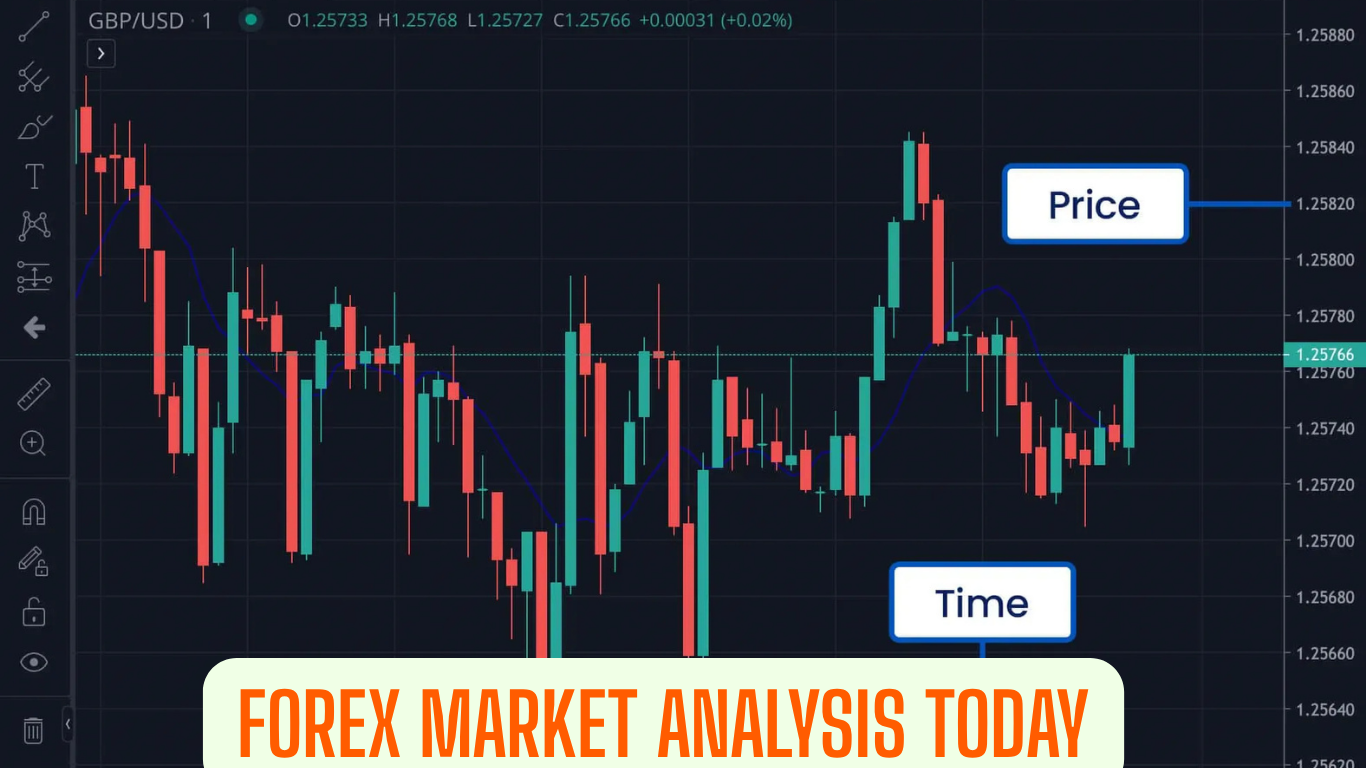
The GBP/USD is testing the key 1.3120 level after failing to sustain a move to multi-day highs . The UK has its own key data releases this week, including Consumer Price Index (CPI) inflation figures, which will be critical for shaping expectations about the Bank of England’s future monetary policy .
Commodity Corner: Gold’s Glitter and Oil’s Slide
Gold’s Record Run and Volatility
Gold has been on a spectacular run, rising over 5.88% last week to hit a new all-time high before paring some gains . This surge is a classic response to uncertainty, with investors seeking the safety of the precious metal. However, the rally has been accompanied by extreme volatility. While the long-term bullish trend remains intact, the sharp one-day drops seen in other precious metals like Silver and Palladium suggest the market might be nearing a short-term peak . Traders might consider waiting for a new record high close above $4,326 before entering new long positions .
Crude Oil Under Pressure
Crude oil prices continue to face bearish pressure near their 2025 lows . The weakening growth projections from China and the EU are dampening the demand outlook for energy. All eyes are on China’s quarterly GDP report, which is expected to show a decline from 5.2% to 4.7% . Technically, the $55 level is a critical support. A break below this could open the path for a decline toward the $49-$50 zone. For a sustained bullish recovery, prices would need to break above the $58 resistance and, more importantly, decisively escape a multi-year downtrend channel by moving above $70 .
The Week Ahead: Your Economic Calendar
The coming week features several high-impact economic events that could drive market volatility :
- Chinese GDP and Industrial Production (Monday): Key indicators for global growth and commodity demand.
- UK CPI Inflation (Wednesday): Crucial for Pound Sterling traders and Bank of England policy expectations.
- US Crude Oil Inventories (Wednesday): Always a market-mover for oil prices and the commodity-linked Canadian Dollar.
- US Initial Jobless Claims & Core Retail Sales (Thursday): Important gauges of the US economy’s health.
- US CPI Inflation & Flash PMIs (Friday): The week’s headline event. The US CPI data will be critical for shaping Federal Reserve policy expectations, provided it is released despite the government shutdown.
Actionable Trading Insights for the Week
- For Risk-Off Scenarios: If US-China tensions worsen, look for strength in the Japanese Yen (JPY) and US Dollar (USD), and further gains in Gold. Commodity currencies like the AUD and CAD would likely weaken.
- For Risk-On Scenarios: A positive trade deal would likely boost the AUD, NZD, and CAD while putting pressure on the JPY and Gold. US stock indices would be expected to rally.
- Key Levels to Watch: Monitor the DXY at 98.60 for a Dollar breakout, Gold at $4,326 for a confirmation of its bull run, and Crude Oil at $55 to see if the sell-off deepens.
Conclusion
Today’s Forex market is a complex web of geopolitical tension and economic anticipation. The overarching narrative is one of caution, driven by the US-China trade war, which is creating opportunities in safe-haven assets and volatility in growth-linked currencies. Success this week will depend less on predicting the news and more on reacting strategically to it. By keeping a close watch on the key economic calendar events, understanding the technical levels outlined above, and managing your risk effectively, you can navigate the inherent uncertainty and position yourself to capitalize on the market’s next major move.
Disclaimer
This article is for informational and educational purposes only and does not constitute financial advice, investment recommendation, or an offer or solicitation to buy or sell any financial instruments. Trading foreign exchange (Forex) on margin carries a high level of risk and may not be suitable for all investors. There is a possibility that you may sustain a loss equal to or greater than your entire investment. Therefore, you should not invest or risk money that you cannot afford to lose. The high degree of leverage can work against you as well as for you. Past performance is not indicative of future results. You should be aware of all the risks associated with Forex trading and seek advice from an independent financial advisor if you have any doubts. The author and publisher are not responsible for any data or information provided by third parties referenced in this communication.
FAQs
1. What is the single biggest factor moving the Forex market today?
The dominant theme is the escalating US-China trade dispute. The threat of a 100% tariff on all Chinese imports by the US and potential retaliatory measures from China, such as restricting rare earth element exports, has created a “risk-off” environment. This is causing volatility across major currency pairs, particularly impacting commodity-linked currencies like the Australian and Canadian Dollars.
2. Why is the Japanese Yen strengthening despite the uncertainty?
The Japanese Yen (JPY) is a traditional “safe-haven” asset. During periods of global geopolitical tension or economic uncertainty, investors tend to move their capital out of riskier investments and into assets perceived as more stable, like the Yen and Gold. This increased demand causes the Yen’s value to appreciate against other major currencies.
3. What is a “risk-off” environment in Forex trading?
A “risk-off” environment is a market sentiment where investors become cautious and risk-averse. They sell assets perceived as risky (like stocks and commodity-linked currencies such as the AUD and CAD) and move capital into safer investments (like the US Dollar, Japanese Yen, and Gold). The current US-China tensions are a classic catalyst for this type of market mood.
4. Why are traders closely watching the US Dollar Index (DXY)?
The US Dollar Index (DXY) measures the US Dollar’s value against a basket of six major world currencies. It is a key indicator of the Dollar’s overall strength. Currently, the DXY is testing a crucial technical resistance level. A decisive breakout above this level could signal the start of a new, sustained bullish trend for the Dollar, affecting all USD-based currency pairs.
5. What high-impact economic event should I watch for this week?
The most critical event is the upcoming US Consumer Price Index (CPI) inflation data. This report is a primary gauge of inflation and will be crucial for shaping expectations about the Federal Reserve’s future interest rate policy. Provided it is released, this data has the potential to cause significant volatility across all major Forex pairs, especially USD pairs.