
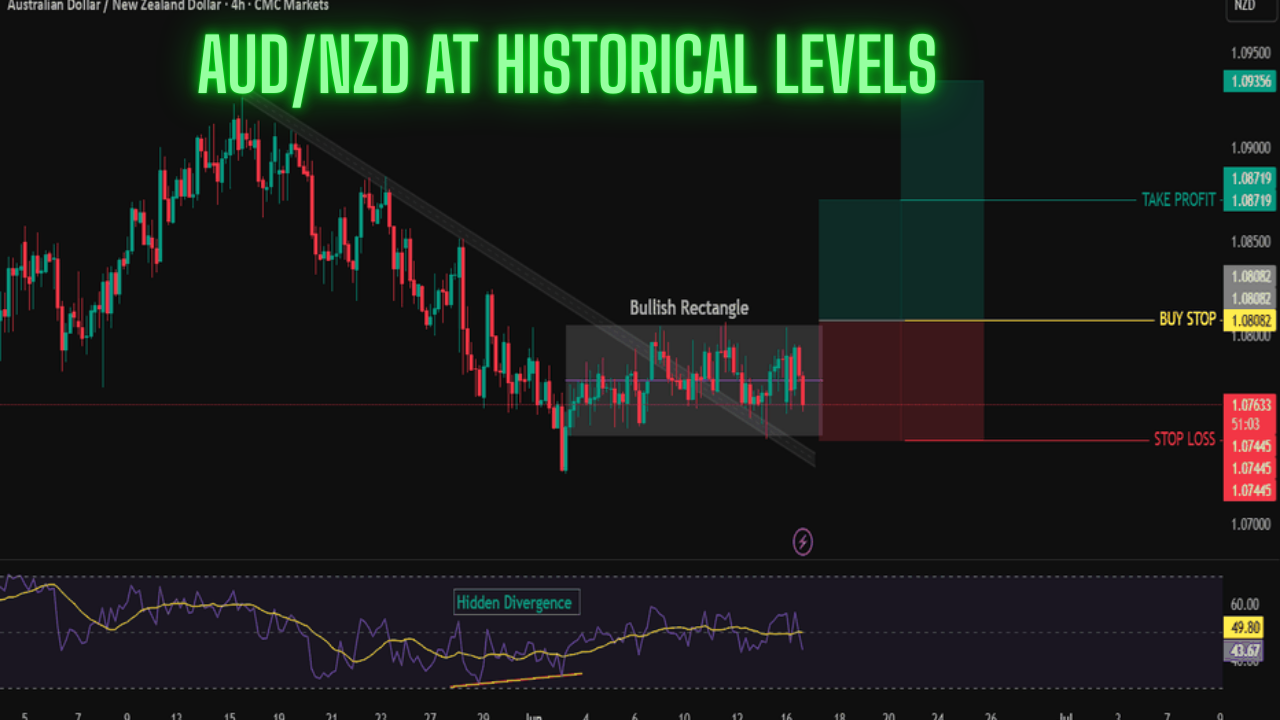
The AUD/NZD currency pair is currently trading at historically significant levels, capturing the attention of forex traders and investors worldwide. As of late September 2025, the cross is trading near 1.1336, representing a substantial 4.3% increase over the past year and continuing a sustained period of Australian dollar outperformance . This impressive bullish trend has pushed the pair to touch its 52-week high of 1.1360, as recorded on trading platforms . The current momentum stems from a clear divergence in economic trajectories between Australia and New Zealand, with recent developments in monetary policy expectations, commodity price movements, and institutional forecast revisions creating a perfect storm for this notable price action.
Historical Context and Performance
The Australian dollar has demonstrated remarkable strength against its New Zealand counterpart throughout 2025. While recent performance shows a 0.9% gain over the past week and 4.3% over the past year , the longer-term perspective reveals even more significant movements. The pair’s 52-week trading range has spanned from 1.0649 to 1.1360 , indicating considerable volatility and positioning the current price near the upper boundary of this range.
Monthly data from OFX further illustrates this sustained upward trajectory, with the average exchange rate climbing from 1.077 in April to 1.116 by September 25, 2025 . This consistent appreciation represents one of the most persistent trends in major currency crosses this year, particularly notable because both currencies are often influenced by similar regional factors yet have recently diverged dramatically.
Fundamental Drivers Behind the Movement
Australian Economic Resilience
The Australian dollar has drawn strength from multiple sources:
- Robust domestic data has surpassed expectations, reducing immediate pressure for further monetary easing from the Reserve Bank of Australia .
- Precious metal prices, particularly gold, have rallied significantly, benefiting Australia’s substantial mining sector and improving its terms of trade .
- Chinese Yuan stability has provided indirect support, as China remains Australia’s largest trading partner, and Yuan strength typically correlates with Australian dollar resilience .
- The RBA has maintained a relatively stable monetary policy stance compared to other developed market central banks, preserving yield differentials that support currency valuation .
New Zealand Economic Challenges
Conversely, the New Zealand dollar faces substantial headwinds:
- Recent data revealed a sharper-than-expected 0.9% contraction in New Zealand’s GDP for the second quarter of 2025, marking the third contraction in five quarters .
- Key sectors including construction, manufacturing, and professional services have shown pronounced weakness, indicating broad-based economic challenges rather than isolated sectoral issues .
- The Reserve Bank of New Zealand is widely expected to implement aggressive interest rate cuts, with markets pricing in a 58 basis point reduction and a 20% probability of a 50 basis point cut as early as October .
- Leadership uncertainty at the RBNZ, with Christian Hawkesby’s interim term ending soon, has injected additional volatility and typically negative currency sentiment .
Table: Economic Comparison Between Australia and New Zealand
| Economic Indicator | Australia | New Zealand |
|---|---|---|
| GDP Growth | Relatively Stable | -0.9% (Q2 2025) |
| Central Bank Stance | Hold Steady | Expected Rate Cuts |
| Key Sector Performance | Mining Strong | Construction, Manufacturing Weak |
| Political/Policy Stability | Predictable | Leadership Transition |
Technical Analysis and Key Levels
From a technical perspective, AUD/NZD exhibits strong bullish momentum across multiple timeframes. The technical rating for the pair is currently a “strong buy” on both weekly and monthly timeframes . Several technical factors support this assessment:
- The pair is trading above its 1-month (1.114) and 3-month (1.100) moving averages, confirming the short to medium-term upward trend .
- Key resistance levels to monitor include the September high of 1.1279, followed by the psychological barrier of 1.1300 .
- On the downside, support levels can be found at 1.1160 (recent minor pullback), 1.1120 (the 1-month average), and 1.1070 (the September low) .
- The pair recently achieved a breakout above the 200-day Simple Moving Average on the daily chart, which technical analysts view as a significant bullish trigger .
However, some analysts note potential bearish reversal risks, with the weekly chart suggesting a potential 5-wave Elliott pattern unfolding from the November high . This pattern would imply that the current uptrend may be approaching exhaustion, though confirmation would require a break below key support levels.
Institutional Outlook and Forecasts
The institutional perspective on AUD/NZD has turned increasingly bullish, with several major banks revising their forecasts upward. UBS, in particular, has notably revised its AUD/NZD projection, now forecasting 1.1400 by the end of 2025 and 1.1200 by the end of 2026 . This revision represents one of the more optimistic institutional views and has contributed significantly to recent price action.
The UBS analysis cites multiple factors supporting their bullish stance, including the potential for a substantial unwinding of short AUD positions by institutional investors who have historically held bearish views on the currency . Additionally, the potential for increased hedging activity by Australian Superannuation funds could provide further support for the Australian dollar .
Table: AUD/NZD Price Projections
| Timeframe | UBS Projection | Key Drivers |
|---|---|---|
| End of 2025 | 1.1400 | RBNZ rate cuts, commodity prices |
| End of 2026 | 1.1200 | Policy normalization, economic rebalancing |
Other analysts present more balanced perspectives, noting that while the short-term momentum favors the Australian dollar, the medium-term outlook may see some reversion as monetary policy differentials normalize and New Zealand’s economy works through its current soft patch.
Future Catalysts and Events to Monitor
Several upcoming events and data releases could significantly impact AUD/NZD direction:
- The RBNZ monetary policy decision in October, where interest rate cuts are widely anticipated .
- The appointment of a new RBNZ Governor, which could signal a shift in monetary policy approach and introduce volatility .
- Australian wage price index and employment data, which will influence RBA policy expectations .
- Chinese economic data, particularly trade figures and industrial production, given China’s importance to Australian export demand .
- Global risk sentiment shifts, as both currencies are considered risk-sensitive, though typically to different degrees .
Trading Considerations and Risk Management
For traders considering positions in AUD/NZD, several factors warrant careful attention:
- The pair has shown 0.77% gains over the past week and 2.12% over the past month, indicating strong momentum but also potential overextension in the very short term .
- Volatility measures for the pair stand at approximately 0.21%, which is moderate for a currency cross, suggesting reasonable risk-adjusted positioning opportunities .
- The bullish case remains supported by stronger Australian economic data, commodity price strength, and divergent central bank policies .
- The bearish case could materialize through an unexpectedly hawkish RBNZ shift under new leadership, sharper deterioration in global risk sentiment, or surprise RBA easing .
Risk management is particularly crucial at current levels, given the pair’s proximity to multi-year highs and the potential for profit-taking or mean reversion. Position sizing, sensible stop-loss placement, and careful monitoring of the fundamental catalysts mentioned above are essential components of a disciplined trading approach.
Conclusion
The AUD/NZD exchange rate’s position at historical levels represents a convergence of compelling fundamental divergences, technical breakout patterns, and shifting institutional sentiment. The Australian dollar’s resilience, bolstered by commodity strength and relative economic stability, contrasts sharply with New Zealand’s economic contraction and anticipations of aggressive monetary easing. While the current trend appears firmly bullish, with technical indicators supporting continued strength toward the 1.1400 region, traders should remain vigilant for potential reversals, particularly around key psychological resistance levels and in response to unexpected central bank developments. The coming weeks will be critical, with RBNZ decisions and leadership appointments likely to determine whether the pair can sustain its record-breaking run or encounter significant resistance at these elevated historical levels.
Disclaimer: This analysis is for informational purposes only and does not constitute financial advice. Currency trading involves substantial risk and is not suitable for all investors. Always conduct your own research and consult with a qualified financial professional before making any investment decisions.
FAQs
1. Why is the AUD/NZD exchange rate so high right now?
The AUD/NZD rate is trading near multi-year highs primarily due to a strong divergence in the economic health and monetary policy outlook of Australia and New Zealand.
- Strong Australian Dollar (AUD): Australia is benefiting from resilient economic data and high prices for its key commodity exports like gold. This has reduced expectations of interest rate cuts from the Reserve Bank of Australia (RBA).
- Weak New Zealand Dollar (NZD): New Zealand’s economy contracted sharply in the last quarter, and the Reserve Bank of New Zealand (RBNZ) is widely expected to cut interest rates aggressively to stimulate growth. This policy divergence makes the Australian dollar more attractive than the Kiwi.
2. How high can the AUD/NZD pair go?
Institutional forecasts have become increasingly bullish. Major banks like UBS have revised their projections and forecast the pair to reach 1.1400 by the end of 2025. The current momentum suggests the pair could test this psychological level, especially if upcoming economic data from New Zealand remains weak and the RBNZ follows through with expected rate cuts.
3. Is it a good time to buy AUD/NZD?
While the trend is currently bullish, trading at historical highs requires caution.
- The Bullish Case: The momentum is strong, and the fundamental drivers (economic strength, commodity prices, interest rate expectations) still favor the Australian dollar.
- The Risks: The pair may be overextended in the short term. Any surprise positive news from New Zealand or a shift in RBNZ policy could trigger a significant pullback. It’s essential to use proper risk management tools like stop-loss orders.
4. What are the key events that could change the trend for AUD/NZD?
Traders should closely monitor these upcoming catalysts:
- RBNZ Monetary Policy Decision (October 2025): This is the biggest event. The market is pricing in a high probability of an interest rate cut, which could weaken the NZD further.
- New RBNZ Governor Appointment: A new governor could signal a change in policy approach, creating volatility.
- Australian Economic Data: Key releases on employment and wages will influence expectations for the RBA.
- Chinese Economic Data: As Australia’s largest trading partner, strong or weak data from China can impact the AUD.
5. What are the main risks of trading AUD/NZD at these levels?
The primary risks include:
- Mean Reversion: After such a strong and sustained rally, the pair is statistically prone to a technical correction or pullback.
- Surprise Central Bank Actions: If the RBNZ is less dovish than expected (e.g., doesn’t cut rates) or the RBA signals potential easing, the current trend could reverse sharply.
- Shift in Global Risk Sentiment: Both are commodity currencies, but a major downturn in global market sentiment could impact them differently than expected, leading to unpredictable volatility.